 Modern
Guides
Language
EnglishCurrency
US dollar · $GetYourGuide shows prices in the currency you choose.
Guide · The art form
Japanese dance cabaret, explained from kabuki to Asakusa
Japanese dance cabaret mixes classical stage dance, sword fighting and modern lighting into one evening. Here is where it comes from, who you see on stage and how a small troupe found its home in Asakusa.
Check availabilityfrom $49 · free cancellation possible
Editorial team, japanesecabaret.comUpdated October 5, 2026Read time: 6 min14 sources
What it is, quickly
- 01The idea
- A staged show of dance and story, not a hostess club.
- 02The roots
- Nihon buyo, the classical dance, grew out of kabuki.1
- 03The first dancer
- Izumo no Okuni is credited with starting kabuki in Kyoto in 1603.2
- 04The characters
- Oiran, geisha and samurai, in an hour-long show at Asakusa Kaguwa.3
- 05The troupe
- It traces back to KAGUWA, a show restaurant that opened in Roppongi in 2004.4
A stage show with a Japanese soul
Japanese dance cabaret is a modern stage form that borrows the look and movement of classical Japanese performance and serves it as an evening of entertainment. You sit at a table with a drink, a small stage lights up in front of you, and a cast of dancers moves through a sequence of scenes. It feels part theater, part revue and part costume parade.
The word cabaret matters here in its European sense: a show you watch, close up, with food and drink nearby. It is worth saying clearly, because in Japan the related term cabaret club means something else entirely, a hostess bar. A dance cabaret has a stage, a running order and an audience, and nobody sits down at your table to keep you company.
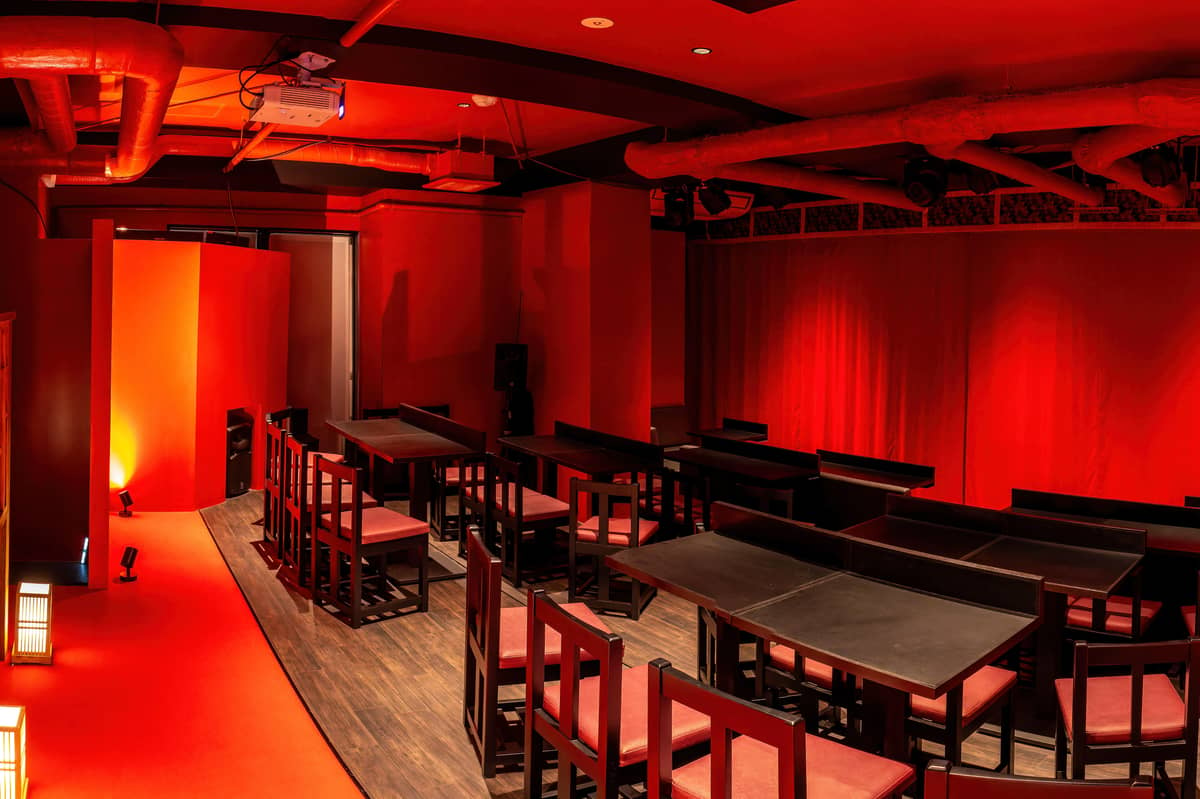
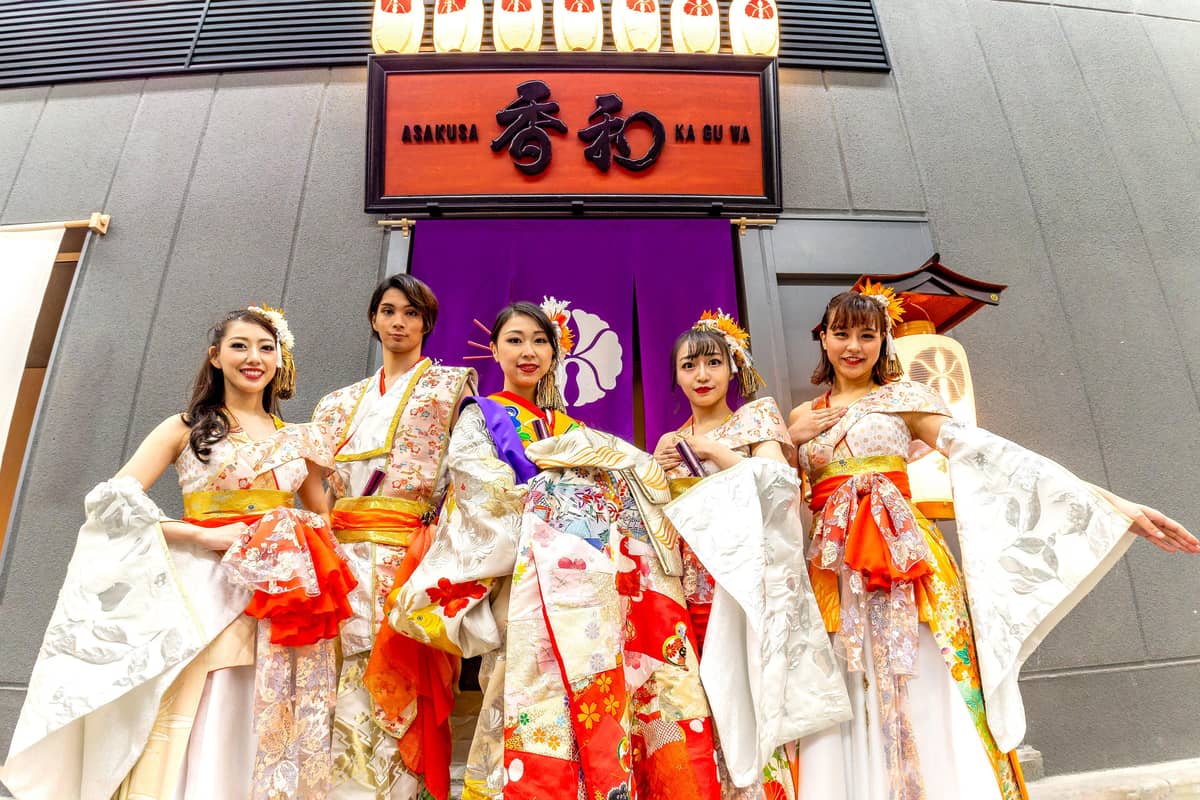
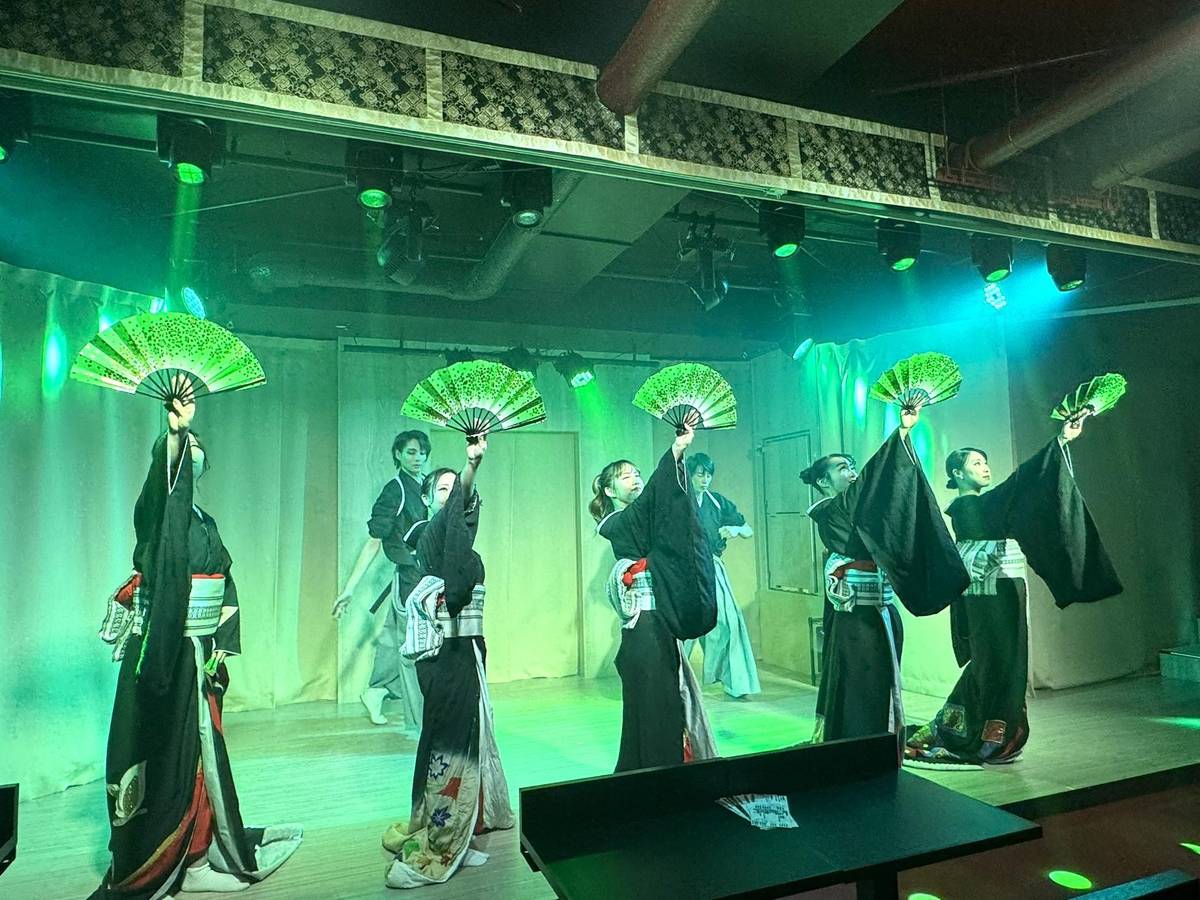
At Asakusa Kaguwa, the form takes the shape of a Japanese-style show theater where performers dressed as oiran, geisha and samurai perform a run of acts in an hour-long show.3 It is non-verbal, so it is built to work for any audience, young or old, Japanese or visiting.5
History
From Okuni's dance to Asakusa Kaguwa
-
1603
Kabuki begins
Izumo no Okuni performs the kabuki dance in Kyoto.2
-
Meiji, Taisho
Rokku booms
Asakusa's Rokku becomes a major entertainment district.6
-
2004
KAGUWA opens
A Japanese-style show restaurant opens in Roppongi.4
-
Later
A troupe on tour
The dancers keep performing in various places.4
-
2026
2nd anniversary
Asakusa Kaguwa marks it on January 10, 2026.7
-
2026
Award in Edinburgh
SAMURAI & OIRAN wins Outstanding Dance Show.8
From kabuki to classical dance
The roots of this kind of show go back to the beginnings of kabuki. Izumo no Okuni is considered to have originated kabuki by performing the kabuki dance in Kyoto in 1603.2 Kabuki started as dance, bold and fashionable, before it became the elaborate dramatic theater that fills the Kabukiza today.
Nihon buyo, the classical Japanese dance, is a traditional performing art that grew out of kabuki.1 Its vocabulary of gestures, fans, slow turns and poised stillness is what you recognise in many dance cabaret scenes, even when the music behind it is modern. A fan becomes a wave, a sleeve becomes a wing, and a held pose tells you more than a line of dialogue would.
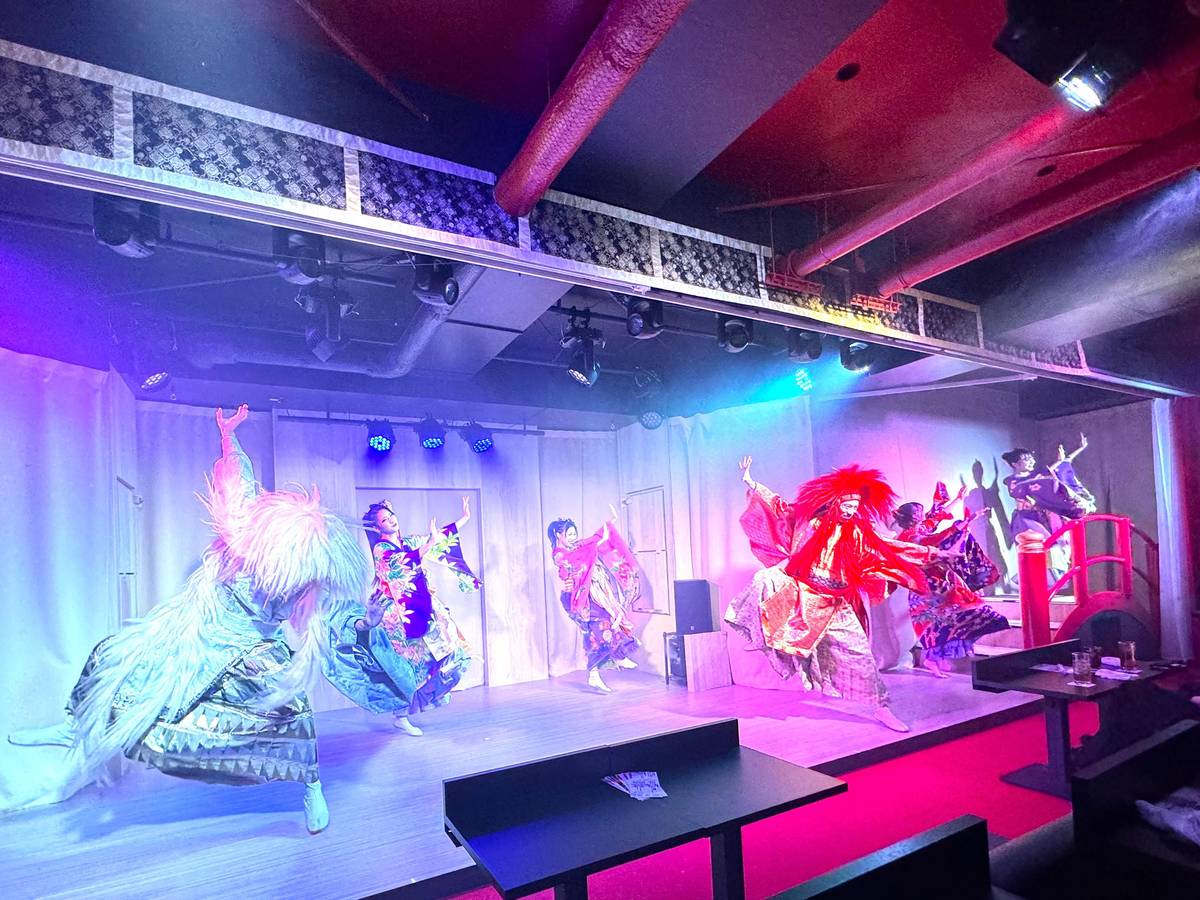
Dance cabaret takes these elements and speeds them up. It adds sword choreography, lion masks, laser lighting and pop rhythms, and it lets one performer switch costumes and characters several times in an hour. Purists may find it loose, but it is exactly that mixture of old and new that makes it accessible to anyone who has never seen kabuki.
On stage
The figures of a dance cabaret
| Figure | Historical role | On stage |
|---|---|---|
| Oiran | Top-ranking courtesan of Edo | Towering hairpins, slow procession |
| Geisha | Trained entertainer | Fans, grace, quiet scenes |
| Samurai | Warrior class | Sword fights, armor, drums |
| Lion dancer | Figure from classical theater | Long manes, dramatic spins |
The oiran's rank from nippon.com; the cast of oiran, geisha and samurai from the theater's own description.93
Decision helper
Which Japanese stage form fits you?
Pick the line that describes your taste
Dance cabaret
An hour-long show with oiran, geisha and samurai.3
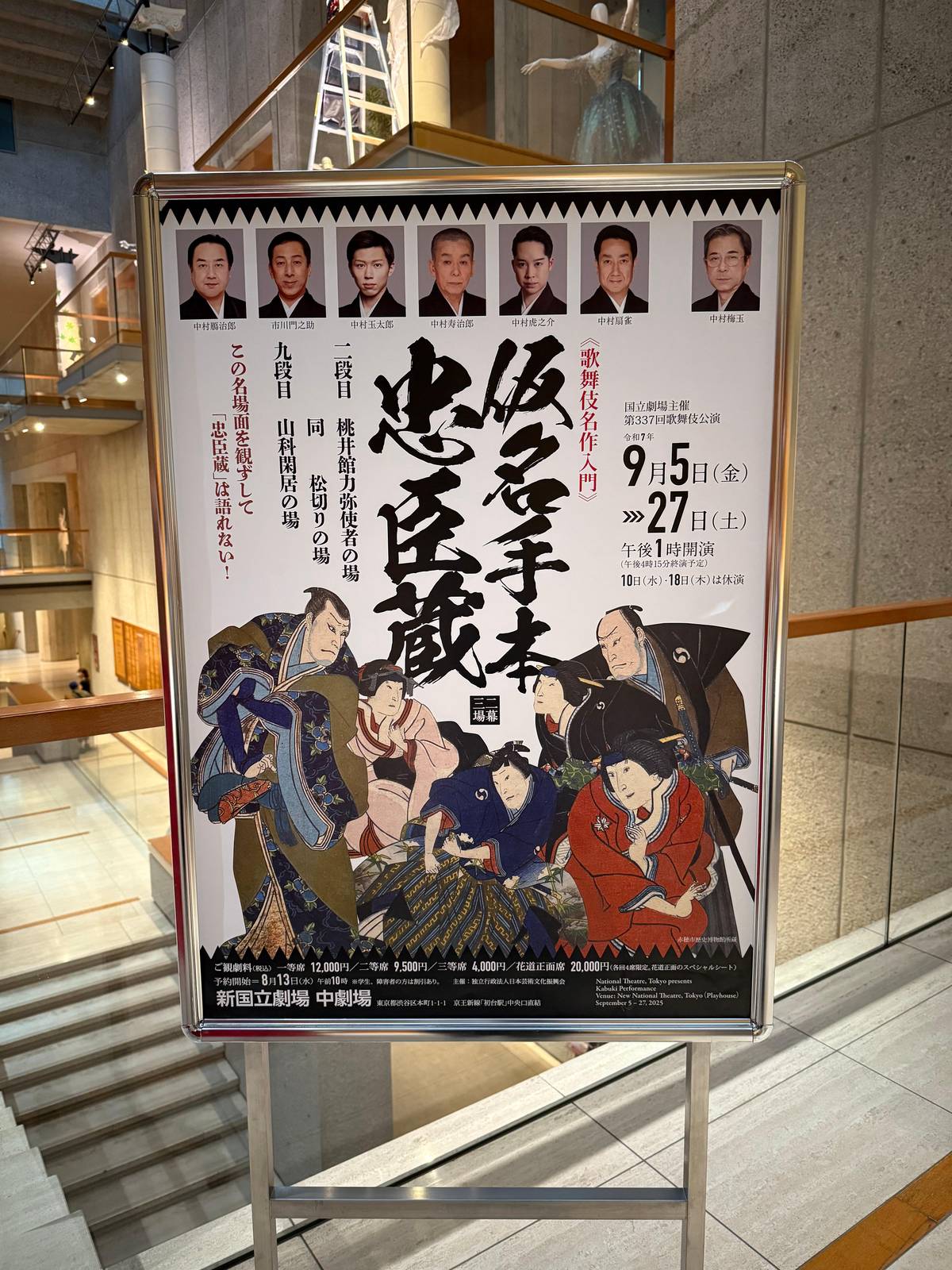
Kabuki at Kabukiza
A performance of 4.5 hours.
National Theatre program
Comes with an English audio guide.
A geisha performance
75 minutes with a tea house.
"NIHONBUYO" is a traditional Japanese performing art that originated from Kabuki.
Oiran, geisha and samurai on stage
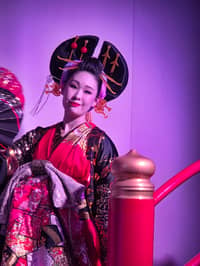
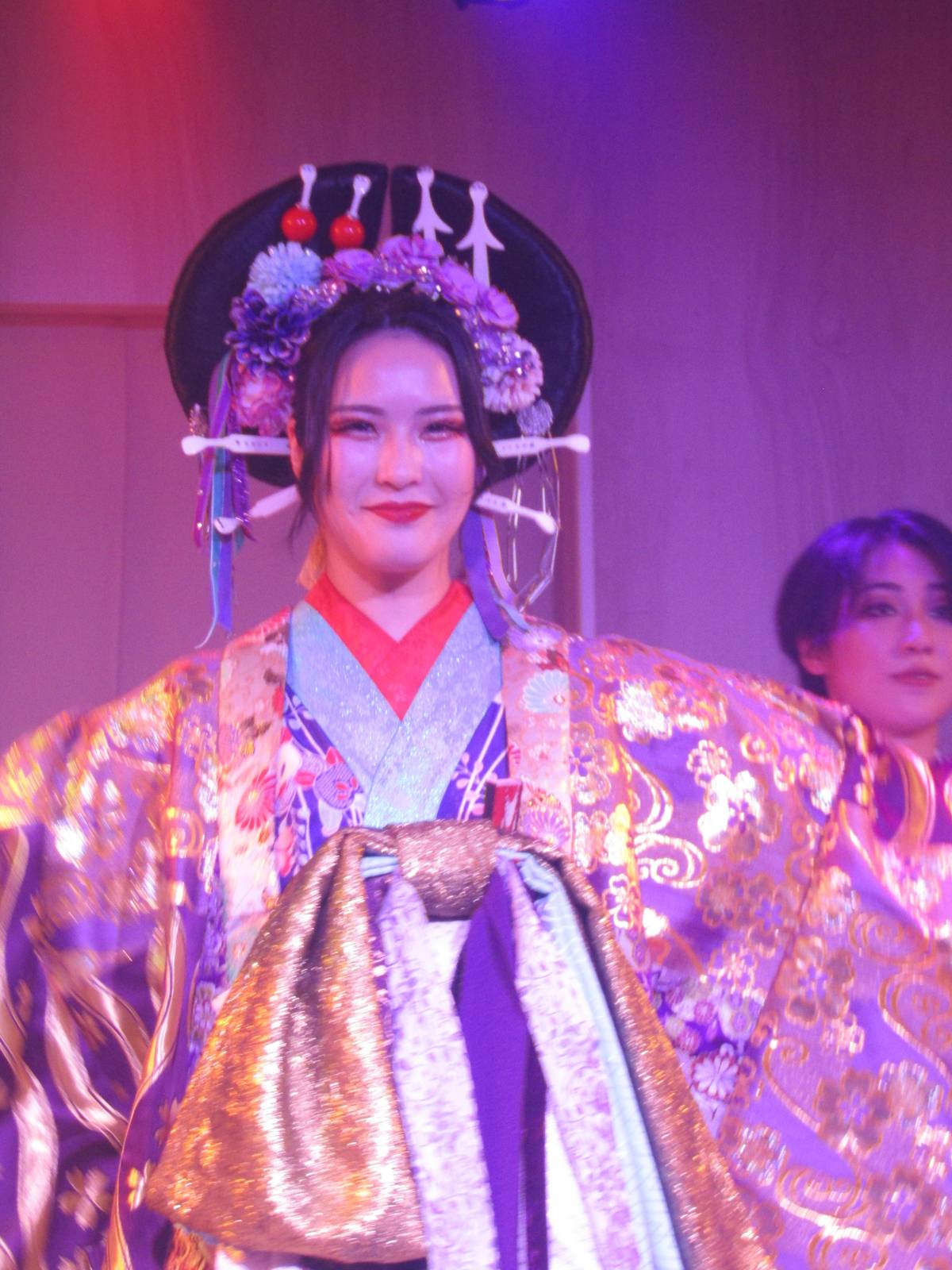
A handful of figures carry a dance cabaret show. The oiran is the most spectacular: in Edo, the highest-ranking courtesans of the pleasure quarters were called oiran, while in the Shimabara and Shinmachi quarters the top rank was known as tayu.9 On stage she appears in towering hairpins, layered robes and high lacquered clogs, moving slowly and with great ceremony.
The geisha stands for refinement: trained entertainers known for dance, music and conversation. On a cabaret stage she brings the fans, the graceful hand movements and the quieter scenes that let the audience breathe between the big numbers. Where the oiran is all display, the geisha is all control.
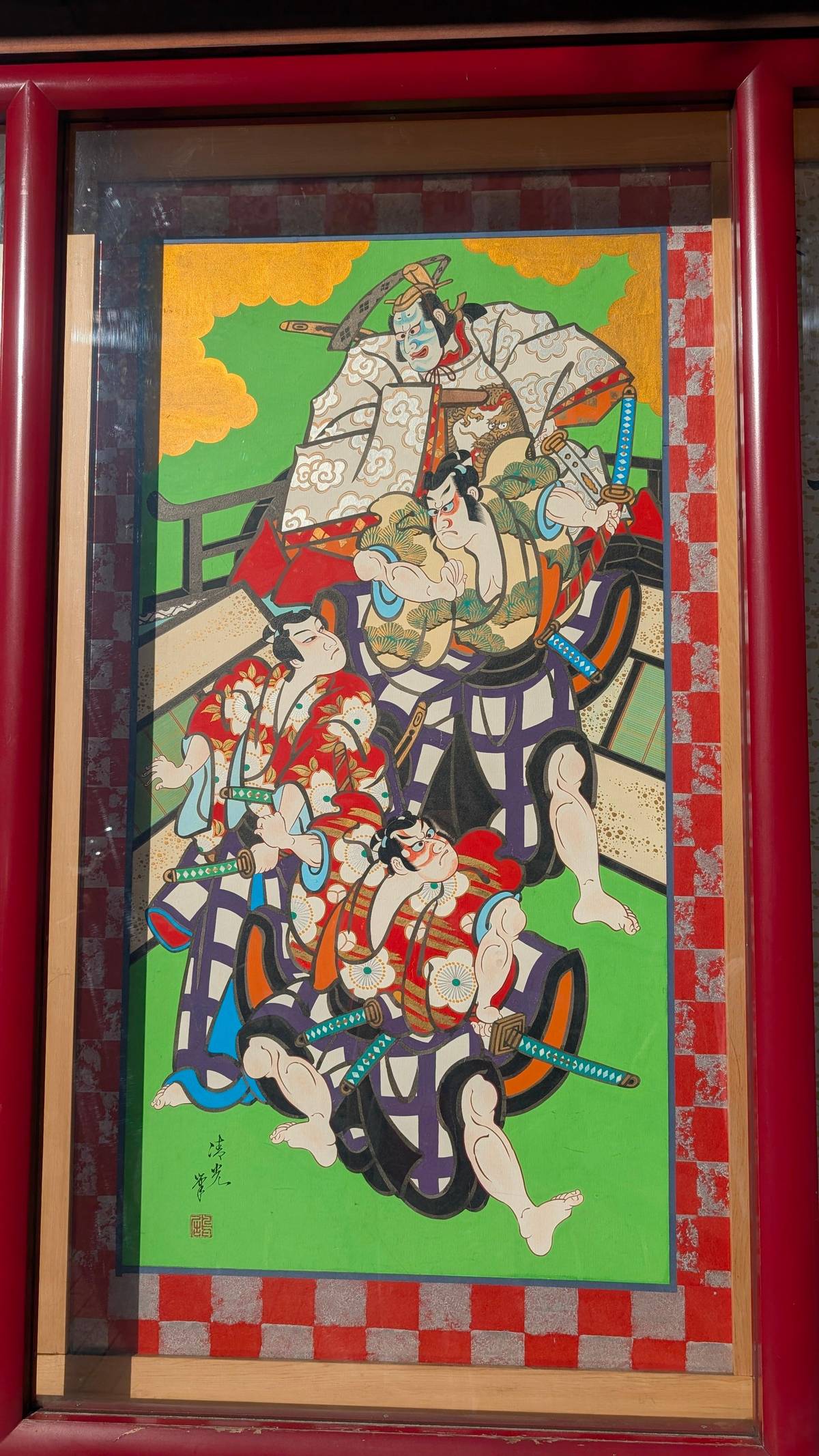
The samurai brings the action. Sword fights, armor and sudden drum beats are the moments when the room wakes up and phones come out. In a good show these figures are tied together by a story, so the swordsman, the courtesan and the dancer are characters rather than a parade of costumes.
Watch for
What to look for during the show
01
On stage
- The oiran's slow, ceremonial walk
- Fans and sleeves used as waves and wings
- Sword fights and the samurai armor
- Lion masks and quick costume changes
02
Around it
- Read the story outline before the show
- Stay for photo time after the curtain call
- Arrive at the time on your voucher
Video
Nihon buyo: traditional dance, beauty in movement
The video is fetched only after you tap play.
Neo Japanesque Kaguwa and the road to Asakusa
The troupe at Asakusa Kaguwa has a longer history than its theater. Its artistic director spent 11 years as a member of KAGUWA, a Japanese-style show restaurant that opened in Roppongi in 2004.4 When that venue closed, the director kept performing in various places as Neo Japanesque Kaguwa, carrying its history and intention forward.4
That touring troupe was the bridge between the old Roppongi show and the new stage. In Asakusa the company found a permanent home, a district with centuries of stage tradition behind it, and the theater celebrated its 2nd anniversary on January 10, 2026.7 For a dance troupe without a fixed home for years, a permanent stage is a big step.
The setting suits it. Asakusa's Rokku district grew into one of Tokyo's major entertainment districts during the Meiji and Taisho periods, with playhouses, storytellers' halls and cinemas.6 A modern dance cabaret on Sushiya-Dori is a new chapter in an old story of a neighborhood that has always loved a show.
Story, music and the award
What lifts the Asakusa show above a revue is its story. Reiroudaiguren follows a girl torn from her childhood friend and sold to a brothel because of her parents' debt, a story of love and friendship among people who keep hope in hard conditions.10 It was written for the theater by Michiru Egashira, a screenwriter known for television dramas.11
The music was composed for the theater too, by the violinist Ryoma of the Ryoma Quartet and the shakuhachi player Masaki Nakamura of Sakura Men.12 The mix of a Western string instrument and the Japanese bamboo flute is a neat summary of the whole genre: classical Japan seen through a modern lens.
The show has also traveled. In 2026, its SAMURAI & OIRAN production won the Outstanding Dance Show award at the Asian Arts Awards, held during the Edinburgh Festival Fringe.8 For a small Asakusa stage, recognition at one of the world's biggest performing arts festivals is a strong sign that the form works far beyond Japan.
Dance cabaret next to other Japanese stages
It helps to place dance cabaret among its neighbors. Grand kabuki at the Kabukiza is long and formal, with a performance of 4.5 hours on its ticket. Popular theater in Asakusa, taishu engeki, is rougher and closer to its audience, with a different troupe each month at Asakusa Mokubakan.13 Dance cabaret sits between them: short, polished and built for a mixed crowd.
Geisha performances are the quietest relatives. A three-geisha performance with a tea house experience in Asakusa lasts 75 minutes and puts the focus on conversation and grace. Samurai shows, at the other end, are pure action and comedy. A dance cabaret borrows from both, with one quiet scene and one loud one following each other all evening.
That is also why it is a good first show. You get a taste of several traditions in one hour, without a long sitting or a language barrier, and you leave knowing which of the older forms you would like to see next. For a short stay in Tokyo, that is a lot of culture in very little time.
How to watch it, and what comes after
You do not need any background to enjoy a dance cabaret, but a little helps. Knowing who the oiran was, why the fan matters in classical dance and what the story is about turns a beautiful hour into a moving one. Read the outline, watch for the costume changes, and let the music carry the scenes you cannot follow word for word.
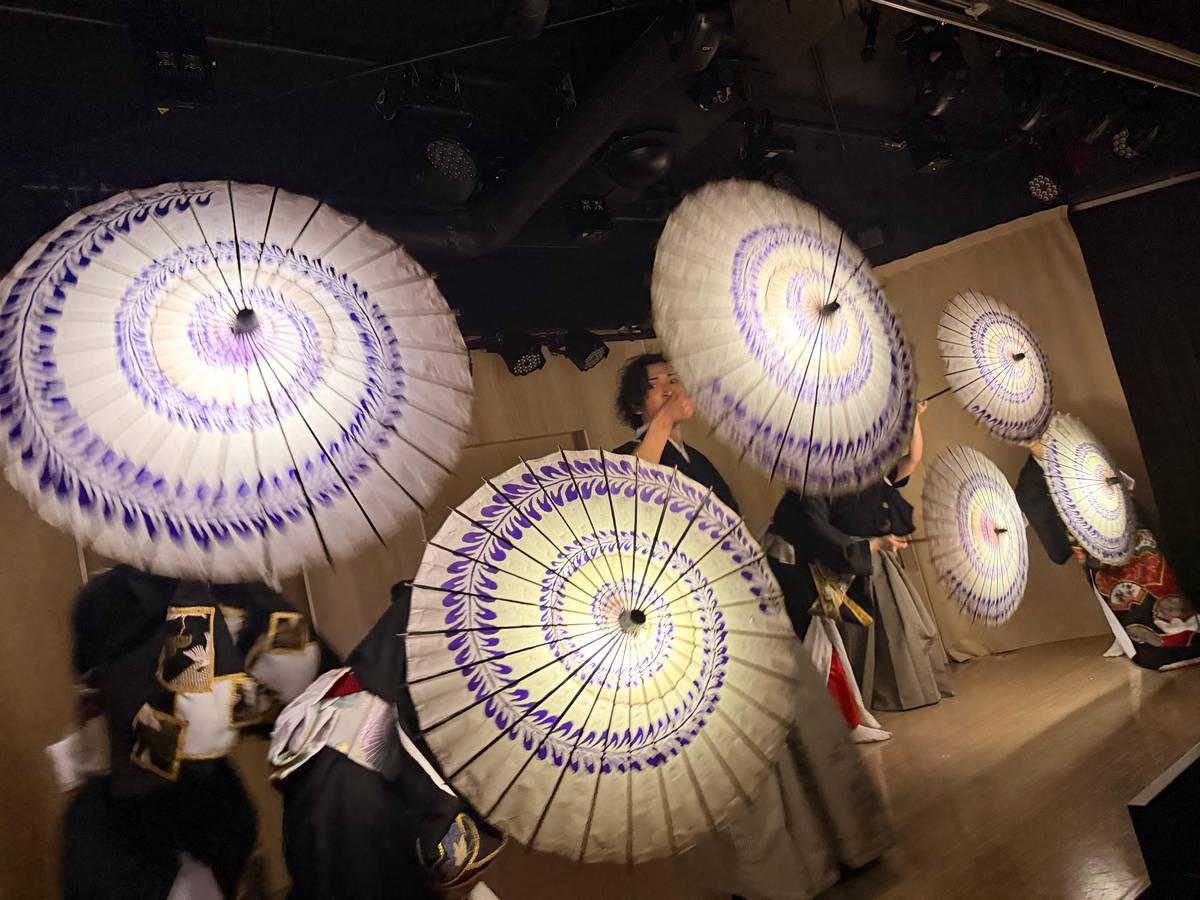
After the final curtain call, Asakusa Kaguwa holds a special photo time when guests can meet the performers.14 It is the moment the stage illusion drops and the dancers become people again, chatting, laughing and posing with fans and umbrellas. It is a warm way to end the night, and the best chance for a photo you will actually keep.
If the show sparks your curiosity, Tokyo offers the rest of the family tree: grand kabuki at the Kabukiza, a program of kabuki and bunraku at the National Theatre with an English audio guide, and geisha performances in Asakusa itself. Seeing one of these after a dance cabaret shows you where every gesture came from.
Tonight in Asakusa
Oiran, swords and a story, an hour from now
Pick your seat and show time; free cancellation up to 24 hours before.


You ask,we answer.
What is a Japanese dance cabaret?
A staged show of dance and story. At Asakusa Kaguwa, oiran, geisha and samurai perform an hour-long show.3
Is it the same as a cabaret club?
No. A cabaret club in Japan is a hostess bar; a dance cabaret is a theater show.
Where does the dance come from?
From kabuki and nihon buyo. Nihon buyo is a traditional performing art that grew out of kabuki.1
What was Neo Japanesque Kaguwa?
The troupe before Asakusa. After the Roppongi show restaurant closed, the director kept performing in various places under that name.4
Who wrote the story?
Michiru Egashira. The screenwriter wrote the original story for the theater.11
Who made the music?
Violinist Ryoma and shakuhachi player Masaki Nakamura. Both composed original music for the theater.12
Can I meet the dancers?
Yes, at photo time. The theater holds a photo time with the performers after the curtain call.14
Sources
What this text is based on
- 1Japan Arts CouncilNational Theatre × Touken Ranbu ONLINE Discover NIHONBUYO↩
- 2Japan Arts CouncilKabuki A to Z:Izumo no Okuni (Okuni from Izumo)↩
- 3ASAKUSA KAGUWA (official website)Home-en - 和風ショーシアター 浅草香和↩
- 4ASAKUSA KAGUWAJapanese-style Show Theater ASAKUSA KAGUWA↩
- 5Asakusa KaguwaJapanese-style Show Theater ASAKUSA KAGUWA↩
- 6Tokyo Convention & Visitors BureauTake a stroll through Asakusa to explore Edo culture↩
- 7Asakusa KaguwaJapanese-style Show Theater ASAKUSA KAGUWA↩
- 8ASAKUSA KAGUWAJapanese-style Show Theater ASAKUSA KAGUWA↩
- 9Nippon.comThe Courtesans of Yoshiwara↩
- 10Asakusa KaguwaPROGRAM・PERFORMERS - 和風ショーシアター 浅草香和↩
- 11浅草香和 / ASAKUSA KAGUWAPROGRAM・PERFORMERS - 和風ショーシアター 浅草香和↩
- 12Asakusa KaguwaHome-en - 和風ショーシアター 浅草香和↩
- 13Taito CityAsakusa Mokubakan Taishu Gekijo↩
- 14Asakusa KaguwaThe Ultimate Guide to Oiran Shows in Tokyo, Japan 2026: From Asakusa Kaguwa to Historic Processions↩
Keep reading